Tie Rod End Replacement for Steering You Can Trust
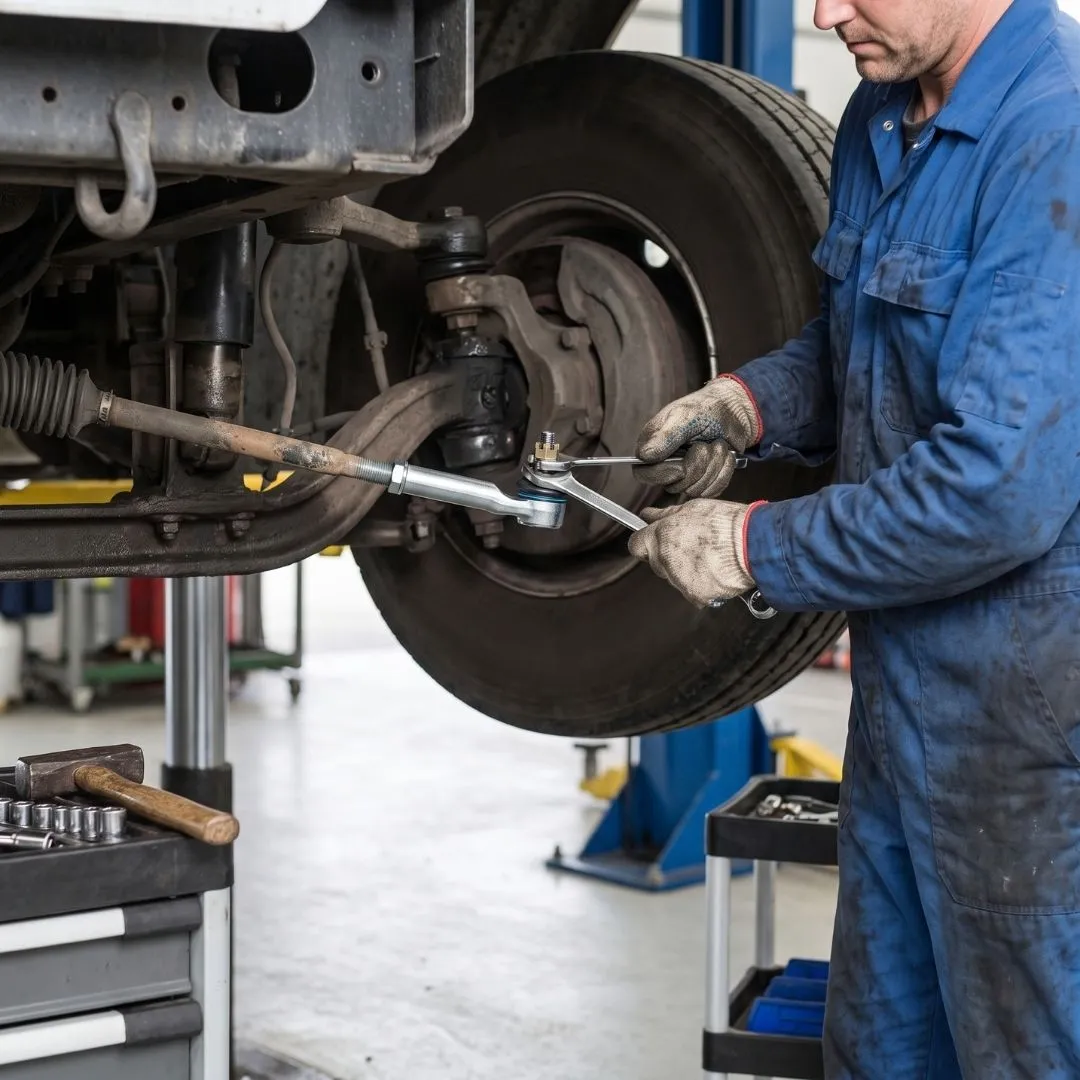
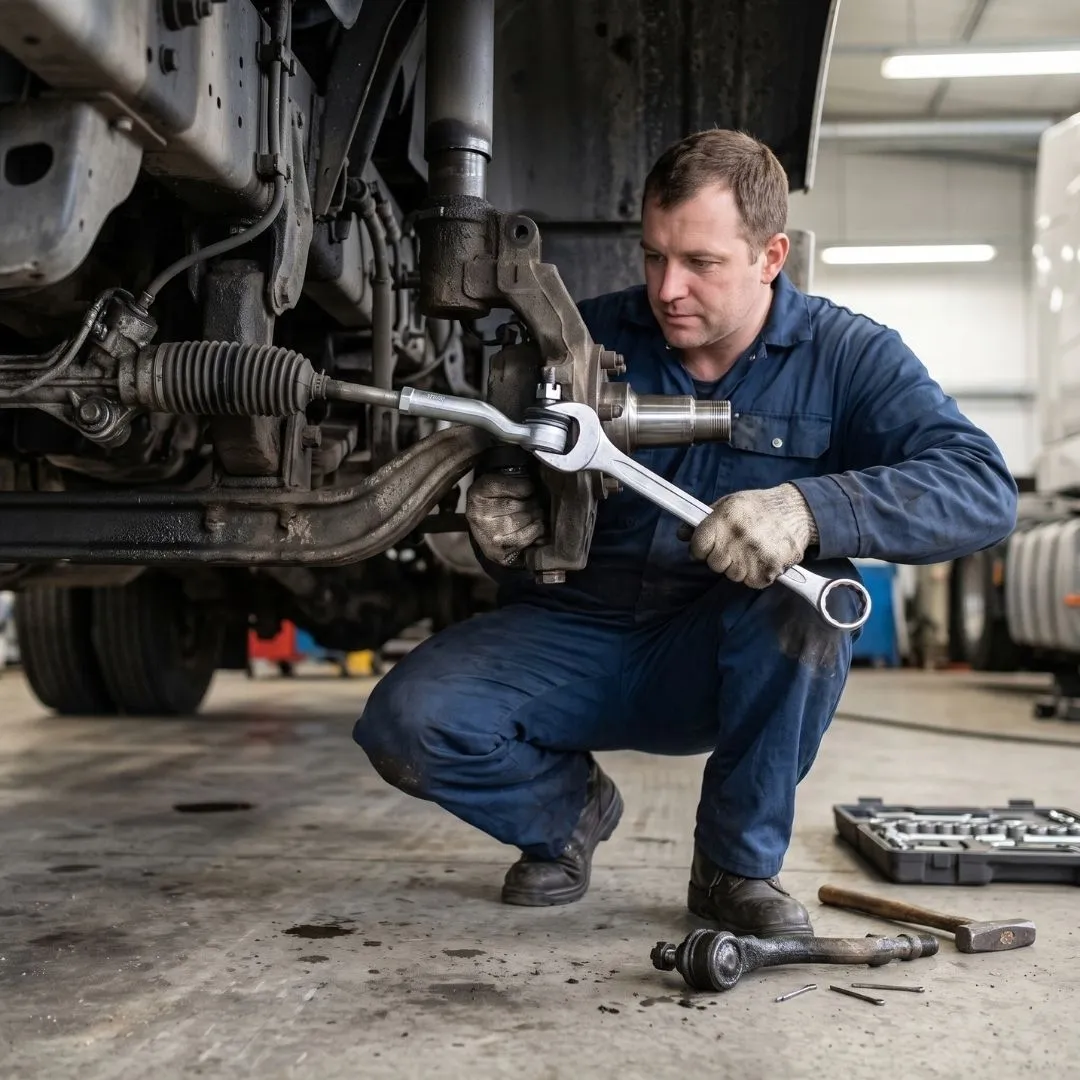
The tie rod assembly connects your steer axle's two wheels, keeping them working together and pointed in the right direction. Each end uses a ball socket that wears over time, especially when boots tear or grease is skipped. Once those sockets loosen, steering gets vague, steer tires start wearing on the edges, and the truck becomes harder to keep in its lane. Wetcreek Repair Solutions replaces tie rod ends and cross tubes on semis and commercial trucks throughout Joplin, MO.
Tie Rod and Steering Linkage Services
Tie rod wear can be hard to spot without the right checks. We inspect each end for play by hand and perform a dry park test, watching the linkage while the steering wheel is turned back and forth with the truck on the ground. Worn ends, bent cross tubes, and damaged boots are replaced with quality parts, and clamps are positioned and torqued correctly. Because new ends change wheel alignment, we set toe before the truck leaves.
Tie Rod End Play Inspection
Dry Park Steering Test
Tie Rod End Replacement
Cross Tube Replacement
Boot and Grease Fitting Replacement
Clamp Position and Torque Check
Toe Setting After Replacement
Drag Link Inspection
Front-End Repairs Backed by Careful Alignment
Replacing tie rod ends without setting toe can wear out a new set of steer tires surprisingly fast. As a diesel repair shop with alignment capability, we finish every tie rod job with proper toe adjustment and a check of the surrounding steering parts. That makes this large truck repair a complete fix for the front end. Fleets include tie rod inspections in their regular truck service in Joplin, MO, catching wear before it costs a set of tires.
Frequently Asked Questions
What's the difference between a tie rod and a drag link?
The tie rod connects the left and right steering knuckles so both wheels turn together. The drag link connects the steering gear to the steering arm, transferring the driver's input to the wheels.What are signs of worn tie rod ends?
Signs include play or looseness in the steering, wandering at highway speed, feathered or edge wear on steer tires, and visible movement in the ends during inspection. A torn boot is also a warning sign.Do I need an alignment after replacing tie rod ends?
Yes. Replacing tie rod ends changes toe settings, so an alignment, or at minimum a toe adjustment, is needed to prevent rapid steer tire wear.Should both tie rod ends be replaced at the same time?
It's often recommended. Both ends wear at a similar rate, so if one is worn, the other is usually close behind. Replacing both also means only one alignment is needed.What should I do if a tie rod boot is torn?
A torn boot lets dirt and water into the ball socket and lets grease escape. If the end already has play, it should be replaced. If it's still tight, replacing the boot or the end soon can prevent faster wear.
Need Reliable Truck Repair in Joplin, MO?
Request Service for trusted diesel repair, roadside help, maintenance, and diagnostics for trucks, semis, and commercial diesel vehicles.
Truck Road Service Across Joplin and Nearby Areas
Broken Down? Get Truck Repair Now
Whether you need roadside truck repair on the highway or a trusted truck repair shop for your fleet, Wetcreek Repair Solutions is ready. Call +1 417-605-7420 for 24/7 truck road service in Joplin, MO.